When it comes to sealcoating NJ driveways and parking lots, the right coal-tar sealer and proper prep make all the difference – and that is exactly what Beckage delivers across Hunterdon, Somerset, and Warren counties.
Sealcoating is the single most cost-effective thing you can do for your driveway or parking lot. A fresh coat of sealer every two to three years keeps water, UV, and oil out of the asphalt — which means your pavement lasts two to three times longer before it needs to be replaced. We sealcoat residential driveways, HOA common drives, church parking lots, office parks, and commercial retail lots across Hunterdon, Somerset, and Warren counties in New Jersey. Beckage Sealcoating is a family-run sealcoating contractor you can actually reach — the same crew and the same standards on every job.
A lot of sealcoating companies cut corners on how they mix their sealcoat. Over-diluting sealcoat makes it cheaper to buy — and the customer pays for it years later when the surface fails early. At Beckage Sealcoating we are in the “Trust Business” more than anything else. Trust and transparency are what set us apart, and that is why we share exactly what we mix and how we apply it on every job.
Commercial sealcoating for parking lots and properties
Beyond residential driveways, Beckage handles commercial sealcoating for parking lots, HOA and condo communities, churches, office parks, and retail centers across Hunterdon, Somerset, and Warren counties. A well-maintained lot is the first thing customers and tenants see — and regular sealcoating protects the most expensive asset on your property.
We work around your business. Sealcoating can be scheduled in sections, after hours, or over a weekend so you never have to close, and we coordinate line striping, ADA stalls, and fire-lane markings in the same visit. You get one clear proposal, an honest mix spec, and a crew that leaves the site clean.
Our sealcoating process, step by step.
A. Trim the edges (if applicable)
All edges of your pavement surface will be power trimmed of all overhanging grass.
B. Clean the surface
The entire pavement surface will be extensively cleaned and blown off, using steel wire brooms and large industrial push blowers to remove all accumulated dirt, dust, stone and debris. A clean surface is the first step to a great sealcoating job.
C. Treat oil and petroleum spots
Any visible oil or other petroleum marks on the pavement surface will be heat flashed to remove all surface solvents from the asphalt. They then will receive one coating of oil spot primer to help insure a strong cohesive bond between the marked areas and the newly applied pavement sealer.
D. Fill cracks 3/8″ and larger
Cracks 3/8 inch or larger (excluding pavement edges) will be cleaned of all dirt and debris and filled using the most highly advanced rubberized hot tar crack sealant available today. After any hot sealant is applied, a coating of Black Beauty sand will be applied, to promote proper adhesion to the sealcoating material. Crack sealant may settle below surface level and be visible after sealcoating — this is within industry specification. Edge cracks, broken-off asphalt, and expansion joint seams at the garage or street are not included in crack repair unless listed on your estimate.
E. Treat alligator (chicken-wire) cracking
Chicken-wire cracked areas (if specified on your proposal) will be cleaned and covered with hot rubberized crack sealant.
F. Patch potholes
Pothole repairs (if specified on your proposal) will be completed by removing all loose debris from the pothole, applying an industrial grade synthetic asphalt patch, and compacting until set firm.
G. Brush-apply our R-P-355e sealer
Once all the above steps are completed we start the sealcoating process. Our premium service is done completely by brush. We brush-apply one liberal coat of our custom-blended exclusive polymer-modified R-P-355e pavement sealer to the entire pavement surface. In our state-of-the-art mixing units we blend in 4% rubberized polymer epoxy latex (which gives the sealer added flexibility and a rich flat black color when dry) and up to 4 pounds of silica sand per gallon (for traction and durability). The result is the darkest, most durable, longest-lasting non-skid surface a homeowner will ever have applied to their pavement. Our premium sealer is also environmentally friendly and has the lowest odor of any sealer available today.
H. Cone off, cure, and final walk (commercial only)
Once the sealcoating of your pavement is completed we install a sign, wooden stakes, and a barricade of caution tape, which should be left in place for a minimum of 48 hours. When you remove the barricade and drive onto the new surface, be gentle with your steering. Sharp turning may leave some tire marks on the new surface, but rest assured they will dissipate over time. If the car is stationary, do not turn the wheel on the new surface — those areas cannot be fixed.
Get a quote for sealcoating.
A note on what sealcoating won’t do.
“Our sealcoating will not remedy low spots, smooth out rough surfaces, or hide defects.”
All materials used by our company meet every federal and state specification for use in our line of work. We stand behind our materials and workmanship 100%. If you have any questions about your sealcoating application, we are only a phone call away. Since 1994, the reputation of our company has been built on our customers’ satisfaction and we strive to continue to uphold and improve this. We thank you in advance and look forward to hearing from you.
“A coal-tar emulsion sealcoat lasts 2–3 times longer than asphalt-emulsion sealcoat. That is why we only offer coal tar — it is a cost saving for our customers.”
R-P-355e federal specification.
Below is the minimum standard (the foundation) of how we mix our sealcoat. Our custom mix design typically exceeds these requirements. Most contractors don’t share this kind of information with their clients — you should ask yourself why.
- Scope: Coal-tar (refined) pitch emulsion for coating bituminous pavements.
- Application rate: 1.5 to 2.5 gallons per 100 sq ft in two coats.
- Source material: Straight-run high-temperature coke-oven tar conforming to ASTM D 490.
- Restrictions: Petroleum tar, oil, and water-gas tars shall not be used.
- Drying time: Firm set in not more than 8 hours.
- Adhesion: No penetration or loss of adhesion to kerosene or water.
- Heat resistance: No blistering, sagging, or slipping at 80°C (176°F) for 2 hours.
- Flexibility: No flaking, cracking, or loss of adhesion to metal.
- Impact resistance: No chipping, flaking, cracking, or loss of adhesion exceeding ¼” beyond impact periphery.
- Volatilization resistance: Weight loss not to exceed 10 percent per ASTM D 3320.
- Wet-film continuity: Uniformly smooth, nongranular consistency, free from coarse particles.
- Freezing resistance: Emulsion capable of -17°C (0°F) exposure for 24 hours when specified.
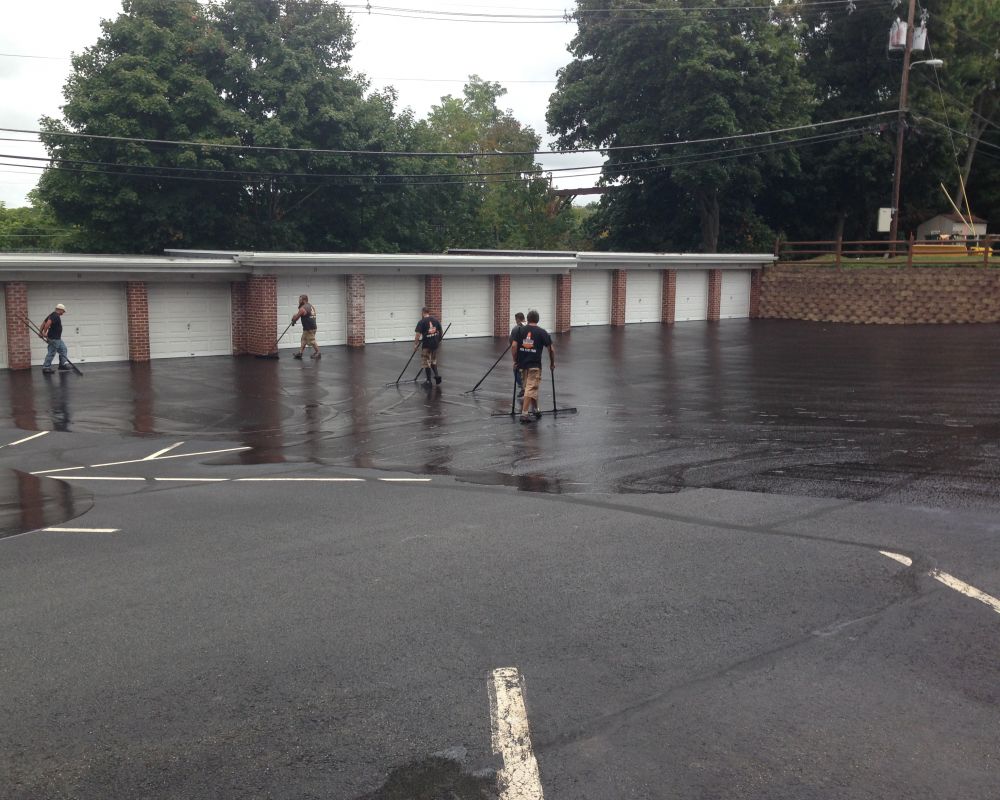
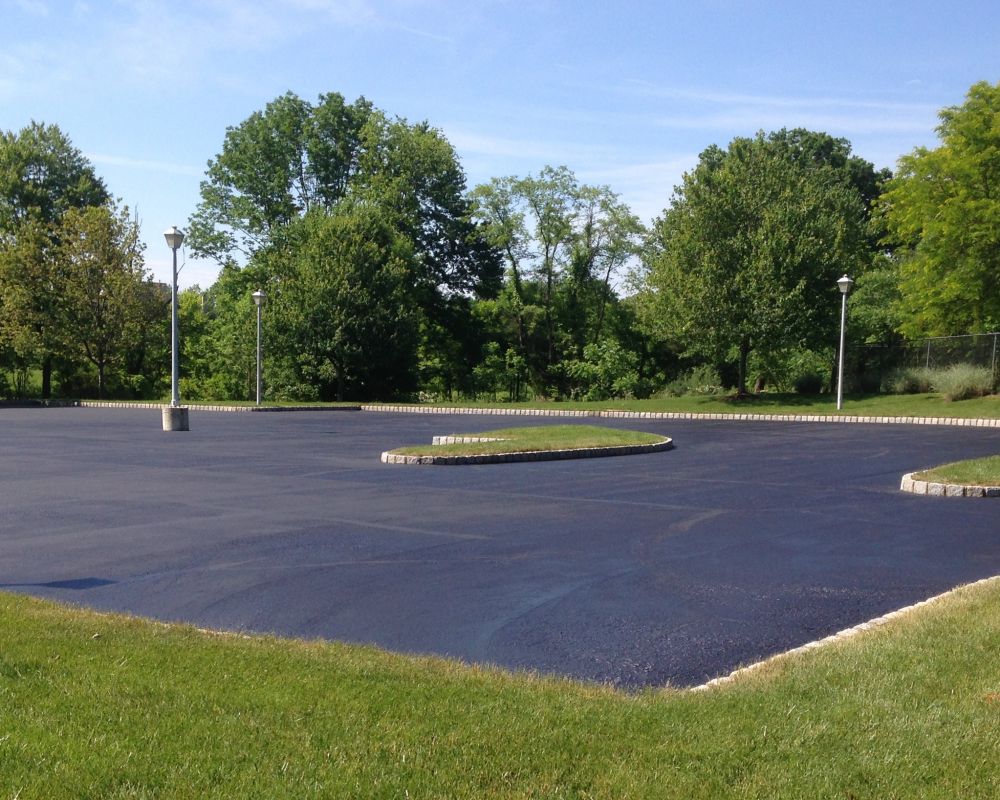
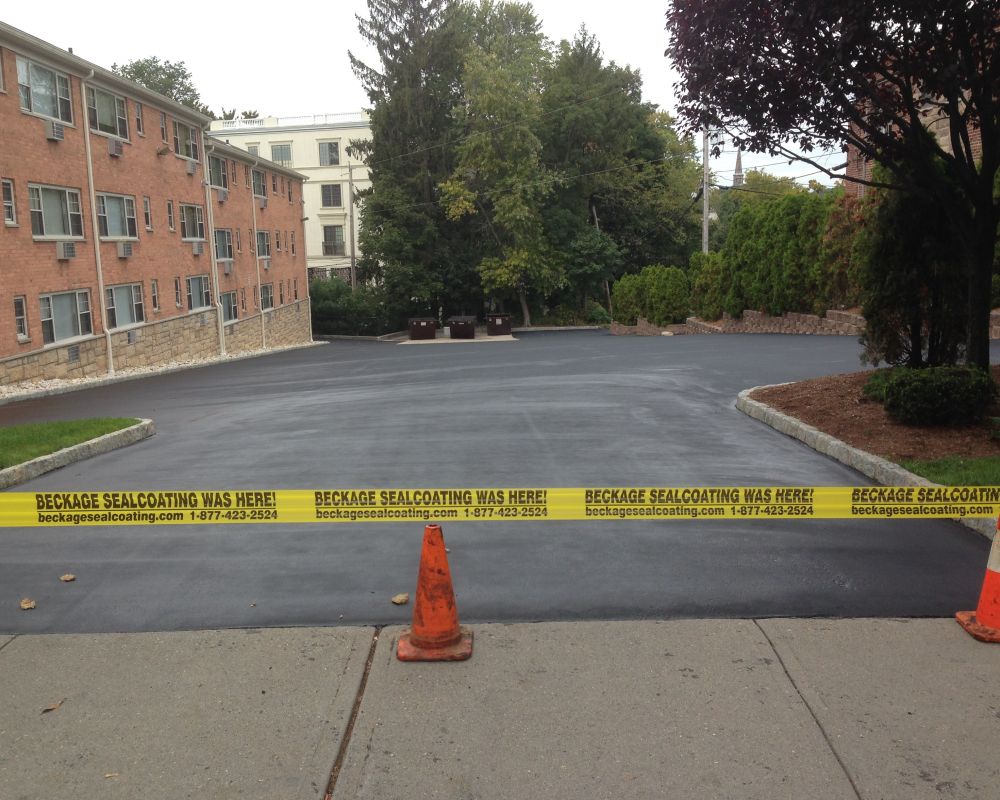
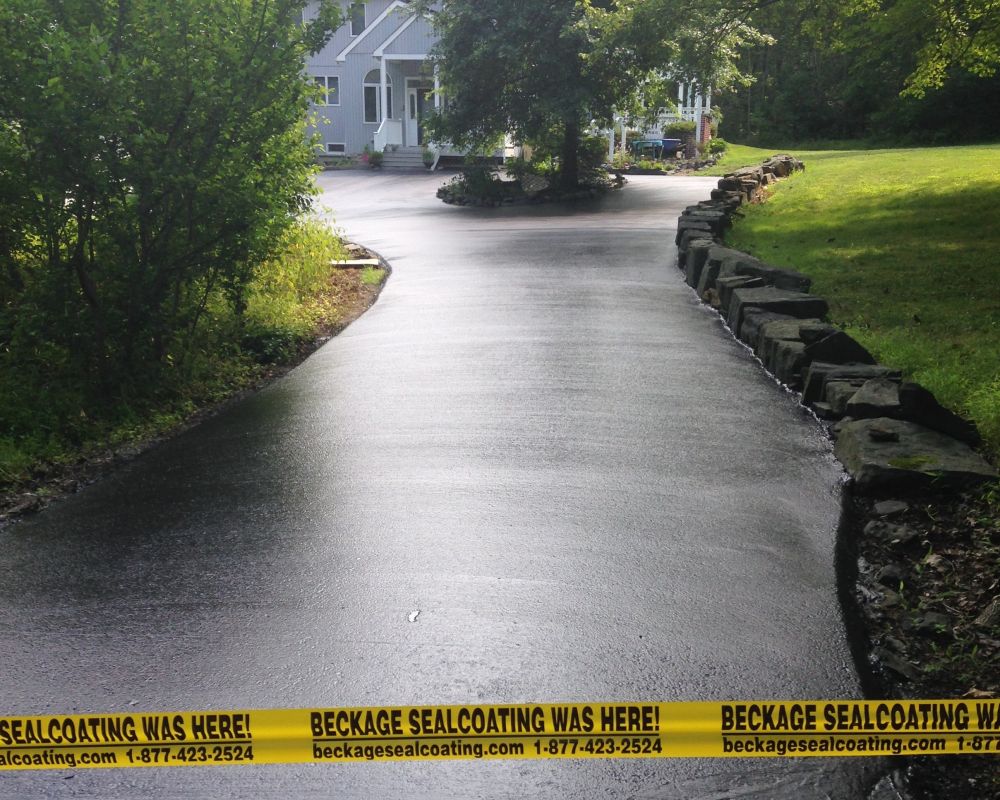
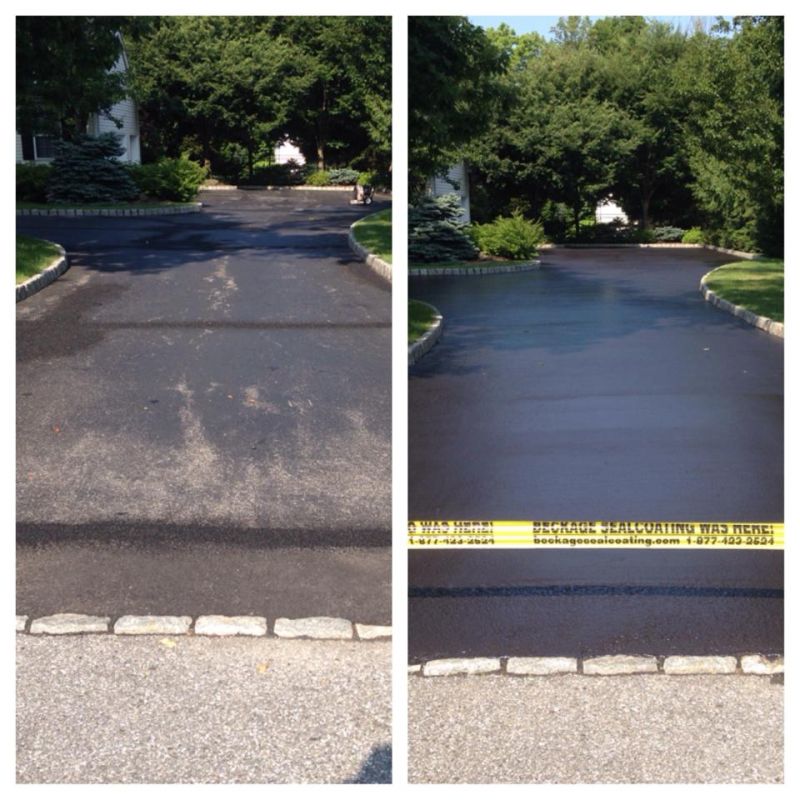
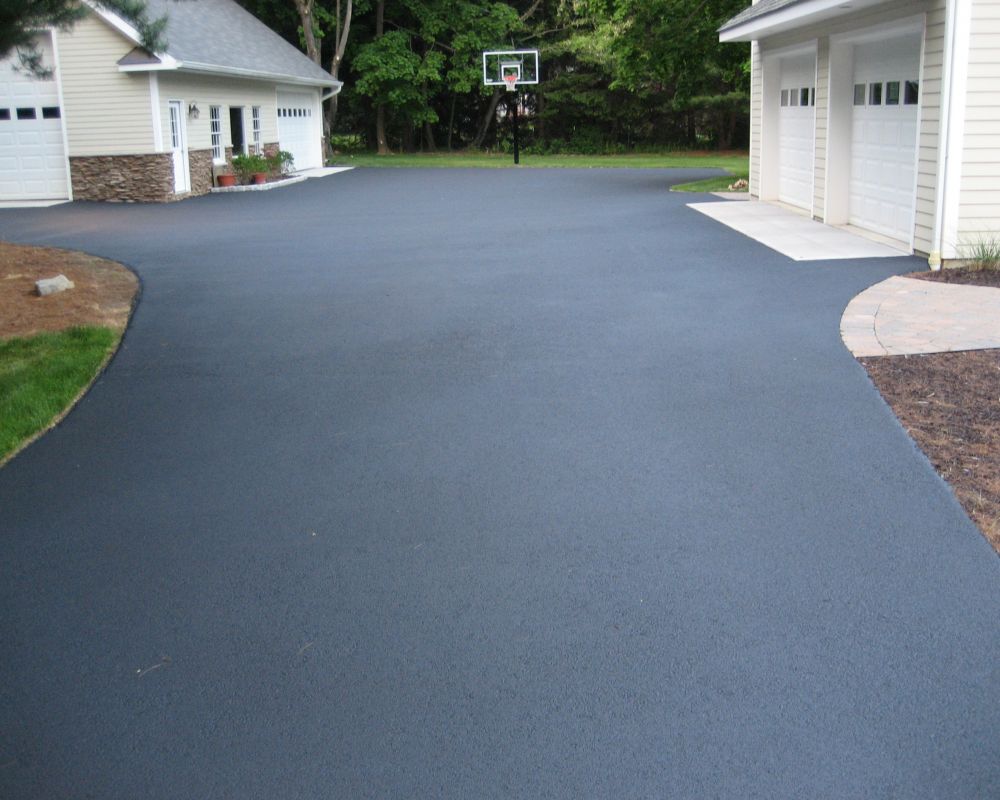
Recent sealcoating projects.
The sealer brands we trust
Trusted manufacturer partners


Ready for a free estimate?
We respond within one business day.